
In most contact centers, QA scores flow to the operations manager, who reviews them, prepares for a coaching session, and works with the agent on the identified failures.
That is where the data stops.
Training sits in a separate lane, building content based on conversations with the floor, leadership requests, or their own observations. The result is a training calendar that reflects what people believe is failing, not what the data shows.
The deeper problem starts before the routing.
A checklist-based scorecard measures whether something happened, not whether the behavior that drives outcomes was present. That kind of data cannot change anything because it was never connected to what actually matters. If the scorecard is not built around behaviors tied to desired outcomes, neither coaching nor training will move performance.
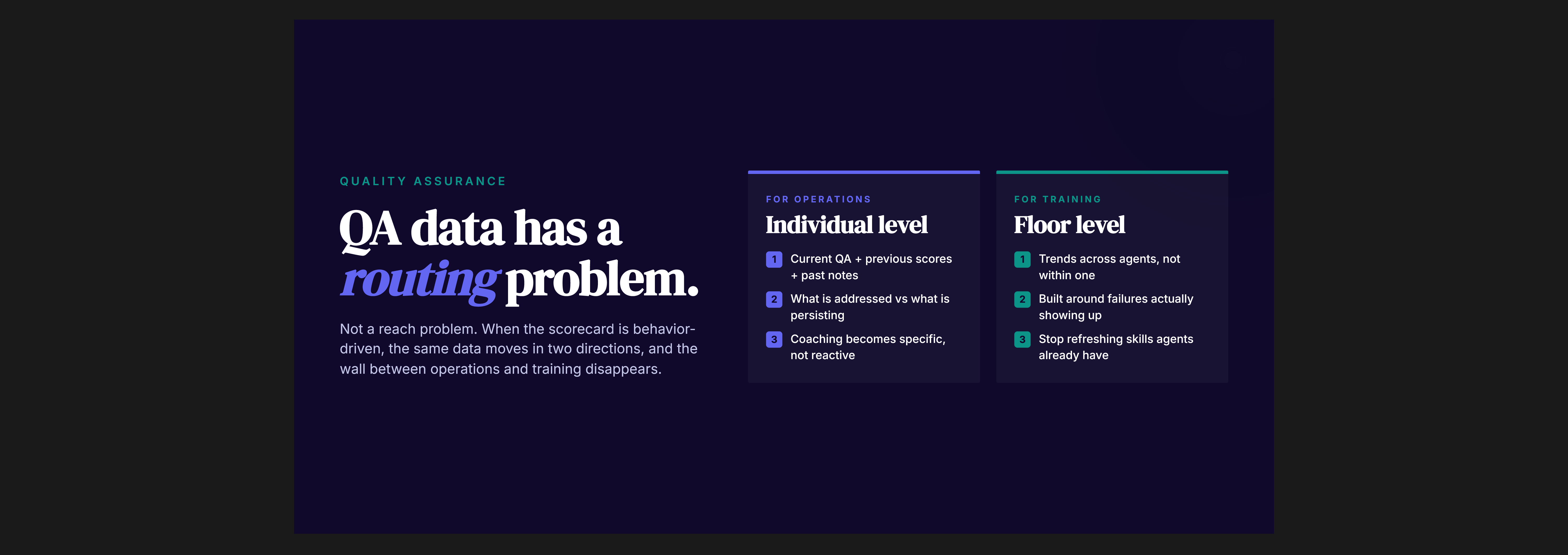
When the scorecard is behavior-driven, the data becomes useful in two directions.
Operations uses it at the individual level. Before a coaching session, the manager reviews the current QA alongside previous scores and past coaching notes. That history shows what has been addressed, what is persisting, and what deserves priority. Coaching becomes specific, not reactive.
Training uses it at the floor level. QA trends reveal what is breaking across agents, not just within one. That is the input training has been missing. Instead of refreshing skills agents already have, content gets built around the failures that are actually showing up in the data.
This is what makes QA a silo killer. Operations and training already communicate. The issue is that those conversations run on instinct and observation rather than a shared data source.
Behavior-driven QA gives both departments the same grounding. FiveLumens connects that data across coaching and training so the same scorecard that drives an individual session also informs what gets built for the floor.